
OUR BLOG
CPR Real Estate Blog
Stay updated with CPR Real Estate’s latest news, market insights, and property trends in Sydney. Our blog offers expert advice for buyers, sellers, and investors.
Navigating Australia’s Property Market: The Dual Impact of Interest Rate Hikes and Geopolitical Tensions

Australian Property Market Interest Rates and landscape is experiencing unprecedented challenges. Homeowners and investors must navigate through turbulent economic waters. The combination of aggressive interest rate increases by the Reserve Bank of Australia and escalating geopolitical tensions in the Middle East has created a perfect storm. As a result, the residential property market is being reshaped across major cities and regional areas alike.
Understanding the Current Market Dynamics
The Australian property market has traditionally been resilient, but recent developments are testing its strength. The Reserve Bank’s monetary policy decisions are influenced by both domestic inflation concerns and global economic instability. As a result, borrowing costs have been pushed to levels not seen in over a decade. This shift represents a fundamental change from the ultra-low interest rate environment. Previously, this environment supported property price growth for nearly fifteen years.
Simultaneously, international conflicts involving Iran and regional tensions have disrupted global supply chains. This disruption is driving commodity prices higher and contributing to persistent inflationary pressures. These geopolitical events create ripple effects that extend far beyond their immediate geographic boundaries. Additionally, they influence everything from fuel costs to construction materials. Ultimately, this impacts Australia’s economic stability and housing affordability.
Key Market Impacts and Trends
Borrowing Capacity Constraints Higher interest rates directly translate to reduced borrowing power for prospective homebuyers. A typical Australian family seeking a mortgage now faces monthly repayments that are substantially higher than they were just twelve months ago. Accordingly, this shift has effectively priced out many first-time buyers from major metropolitan markets. Therefore, many are forced to either delay their property purchases or consider locations further from city centers.
Regional Market Variations While Sydney and Melbourne continue to show signs of cooling, auction clearance rates are declining and days on market are increasing. However, some regional markets are demonstrating surprising resilience. Areas with strong employment growth, infrastructure development, or natural resource industries are maintaining steadier price levels. This occurs despite the challenging economic environment.
Investment Strategy Adjustments Property investors are reassessing their portfolios and strategies in response to changing market conditions. The traditional approach of capital growth over rental yield is being questioned. Now, investors seek properties that can provide stronger cash flow to offset higher holding costs. This shift is particularly evident in markets where rental demand remains robust, despite broader economic uncertainties.
Economic Pressures and Market Response
The construction industry faces unique challenges as material costs rise due to global supply disruptions. At the same time, demand for new housing remains constrained by higher financing costs. Therefore, this creates a complex dynamic where housing supply may be further restricted. This occurs at a time when affordability is already a significant concern for many Australians.
Energy costs, influenced by global oil market volatility, are adding to household budget pressures. Australian families are experiencing increased costs across multiple categories, from petrol and utilities to groceries. This reduces their capacity to service larger mortgages or save for property deposits.
Future Market Projections
Short-term Outlook The immediate future suggests continued market adjustment as the full impact of rate increases flows through the economy. Properties in premium locations may experience more significant price corrections. Conversely, areas with fundamental supply-demand imbalances might show greater price stability.
Long-term Considerations Australia’s underlying demographic trends, including population growth and urbanisation patterns, continue to support long-term housing demand. However, the pace of price growth experienced in recent years is unlikely to be sustainable in the new interest rate environment.
Strategic Recommendations for Market Participants
Prospective Buyers
- Reassess borrowing capacity regularly as rate changes continue
- Consider areas with strong rental yields and growth potential
- Factor in potential future rate increases when calculating affordability
- Explore different property types and locations to maximize value
Current Property Owners
- Review mortgage structures and consider rate protection strategies
- Evaluate property portfolios for potential refinancing opportunities
- Monitor local market conditions for optimal timing of any property decisions
- Consider energy-efficient improvements to reduce ongoing costs
Investors
- Focus on properties with strong rental demand and yield potential
- Diversify across different market segments and geographic areas
- Stay informed about infrastructure developments that could impact property values
- Consider the tax implications of different investment strategies in the current environment
Market Resilience Factors
Despite current challenges, several factors support underlying market stability. Australia’s population growth continues to drive housing demand, particularly in major cities. Employment levels remain relatively stable, and the banking sector maintains strong lending standards that should prevent the speculative excesses seen in other markets globally.
Additionally, Australia’s resource sector continues to benefit from global demand, providing economic support that helps offset some negative impacts from international tensions and domestic monetary policy tightening.
Conclusion
Australia’s property market is adapting to a new economic reality characterized by higher interest rates and global uncertainty. While short-term volatility is expected, the market’s long-term fundamentals remain sound. Success in this environment requires careful planning, realistic expectations, and a thorough understanding of local market dynamics.
Property market participants who adapt their strategies to current conditions, maintain financial flexibility, and focus on sustainable investment approaches are most likely to navigate successfully through this challenging period and position themselves for future opportunities when market conditions stabilize.
Central Coast Property Predicted to Boom Due to High-Speed Rail Link

Central Coast Real Estate Towards Boom
The Central Coast property market is predicted to boom as momentum builds around the proposed high-speed rail link connecting Sydney and Newcastle. This transformative infrastructure project is expected to significantly reduce travel times, reshape commuting patterns, and unlock new growth corridors across New South Wales. Indeed, Central Coast Real Estate Predicted To Boom is a topic gaining major attention among property investors.
At CPR Real Estate, we are already seeing heightened enquiry levels, increased investor confidence, and growing demand from Sydney buyers seeking lifestyle, space, and long-term capital growth. Central Coast Real Estate Predicted To Boom will impact buyer behaviour as rail infrastructure progresses.
Why Central Coast Real Estate Towards Boom Is Gaining Momentum
The proposed high-speed rail corridor is expected to significantly reduce travel time between Sydney and Newcastle. Faster commuting means professionals can live in spacious coastal homes while working in major employment hubs.
When connectivity improves, demand typically follows. As accessibility strengthens, the Central Coast real estate towards boom trend becomes more than speculation — it becomes a structural shift in buyer behaviour.
Central Coast Real Estate Towards Boom and Infrastructure Growth
Infrastructure investment reshapes property markets. Major rail and transport upgrades often trigger:
-
Increased land values
-
New residential developments
-
Retail and commercial expansion
-
Higher rental demand
The Central Coast benefits from established amenities, strong schools, healthcare facilities, and lifestyle appeal. With transport upgrades on the horizon, the region’s long-term outlook remains strong.
Affordability Driving the Central Coast Real Estate
Compared to Sydney’s premium pricing, the Central Coast offers relative affordability. Buyers seeking larger homes, coastal living, and family-friendly communities are increasingly relocating north.
As Sydney prices remain elevated, spillover demand supports the Central Coast real estate towards boom. Investors entering before full infrastructure delivery may benefit from early capital growth.
Suburbs Positioned for Growth
Key suburbs attracting strong interest include:
-
Gosford
-
Woy Woy
-
Erina
-
Terrigal
-
Tuggerah
These areas combine lifestyle appeal with transport access and development potential. As confidence builds, demand may intensify across these growth corridors.
What This Means for Buyers and Sellers
Buyers
Entering the market during the early stages of infrastructure planning may provide long-term upside. Strategic property selection remains essential.
Sellers
Growing enquiry levels create opportunity. With correct pricing and marketing, sellers may capitalise on strengthening demand conditions.
The Long-Term Outlook
The Central Coast real estate towards boom narrative is supported by infrastructure vision, population growth, and lifestyle migration trends. If the high-speed rail project progresses as planned, reduced commute times could permanently redefine the region’s value proposition.
For investors and homeowners alike, positioning early may prove advantageous.
Partner with CPR Real Estate: https://cprrealestate.com.au/
At CPR Real Estate, we specialise in identifying high-growth corridors and helping clients navigate evolving market conditions. Whether you are:
-
Purchasing your first home
-
Expanding your investment portfolio
-
Selling a premium coastal property
-
Seeking commercial opportunities
For tailored advice, contact CPR Real Estate today and position yourself before the next growth phase accelerates.
Ref: Central Coast Real Estate Predicted To Boom.
High Speed Rail Authority – Newcastle to Sydney: hsra.gov.au/newcastle-to-sydney
Infrastructure Magazine: Newcastle to Sydney in one hour – $659.6m funding for high-speed rail
Realestate.com.au News: Where High-Speed Rail Would Turbocharge Housing Demand
Tenants’ Union of NSW lodges complaint about Gumtree as rent bidding remains rife
Online marketplace Gumtree says it will change its rental property ads after the Tenants’ Union of NSW accused it of breaching the state’s anti-rent bidding laws.Rent bidding is when prospective tenants offer more than the advertised price to secure a place to live.It has been illegal for real estate agents to solicit or encourage bids in NSW since December 2022.The NSW government extended the laws to cover landlords and third-party platforms such as Gumtree and Snug in August last year.
Tenants’ Union of NSW chief executive Leo Patterson Ross told ABC Radio Sydney his organisation lodged a complaint in August with Fair Trading NSW about Gumtree’s “make an offer” function which appears alongside all ads, including its real estate section.
“They’re not really built for real estate and so every single listing has an offer system and they’ve never bothered to change it and it doesn’t appear, at least from the outside, that Fair Trading has been able to stop them,” he told Breakfast presenter Craig Reucassel. After being contacted by the ABC on Wednesday, Gumtree chief product officer Coen Horrevoets committed to removing the “make an offer” function on rental property ads.
Are short-term rentals like Airbnb fueling the rental crisis?
“Gumtree is visited by millions of Australians each month where our ‘make an offer’ function appears across multiple categories throughout our classifieds without it being specifically designed for rental properties,” Mr Horrevoets said.
“While we have not received any complaints from any customers or the state government, we are deactivating the feature.”
The feature remained live as of Wednesday night with more than 500 properties listed in Sydney for rent.
Mr Patterson Ross was pleased Gumtree was listening to the tenants’ union’s concerns, but questioned why it took so long to comply.
“It’s been six months or so since the reforms came in, it shouldn’t really take a radio interview to get a big company like that to change,” he said.
‘Desperate times’
While real estate agents can’t solicit a bid, it is not illegal for tenants to make an offer unprompted and an agent or landlord to accept a higher than advertised price.Mr Patterson Ross said the practice remained rife in the industry.
“It happens both illegally under the current laws, and legally where the tenants are offering the money above [the advertised price],” he said.
Fiona King said she reluctantly offered $15 a week extra to secure a rental property in Frenchs Forest in Sydney’s north in June 2022. While it was completely legal how it unfolded, she said it was a sign of how tough many renters were finding it.
“I felt really guilty doing it but I now understand why people do it, it’s desperate times,” Ms King said.
Another man, who applied for a house in a regional NSW town in November last year, said the real estate agent asked him whether he would match another applicant’s offer to pay $25 extra a week.
At the time, the house was the only one available for rent in the area his family lived. The man, who did not want to use his name as he has ongoing dealings with the real estate agent, said he did not feel he had a choice.
“If you need a rental to live, you just do what you have to do,” he said.
Minister rejects outright rent bidding ban
NSW has ruled out banning unsolicited rent bids from hopeful tenants.
Powered by ABC NEWS
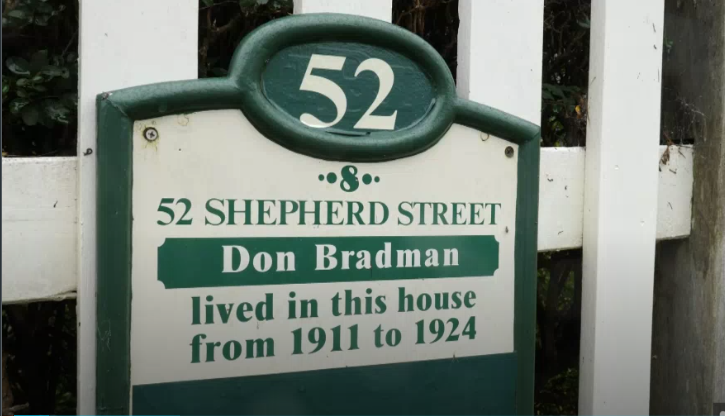
Don Bradman’s childhood home that he lived in from age three to 15 is for sale
New project to deliver 4000 homes to Sydney’s Northwest
Plans have been submitted for an exciting project that will grow the vital Hills Showground Station precinct in Sydney’s north west.
Developer Deicorp has submitted a development application for the 873-dwelling East Showgrounds project in Sydney’s Hills District.
The proposed project sits aside Deicorp’s 430-unit Showground Village, which is under construction.
East Showgrounds is the largest lot at the Hills Showground Station and will make up 3500 sqm of public space including a new park.
Deicorp was appointed by Landcom and Sydney Metro to develop both sites, with plans for the East Showgrounds site being lodged with the Department of Planning and Environment.
Full Article:https://www.news.com.au/finance/real-estate/buying/new-project-to-deliver-4000-homes-to-sydneys-northwest/news-story/19cc8a43ef37a01d45bfaf24c3ee5db0